
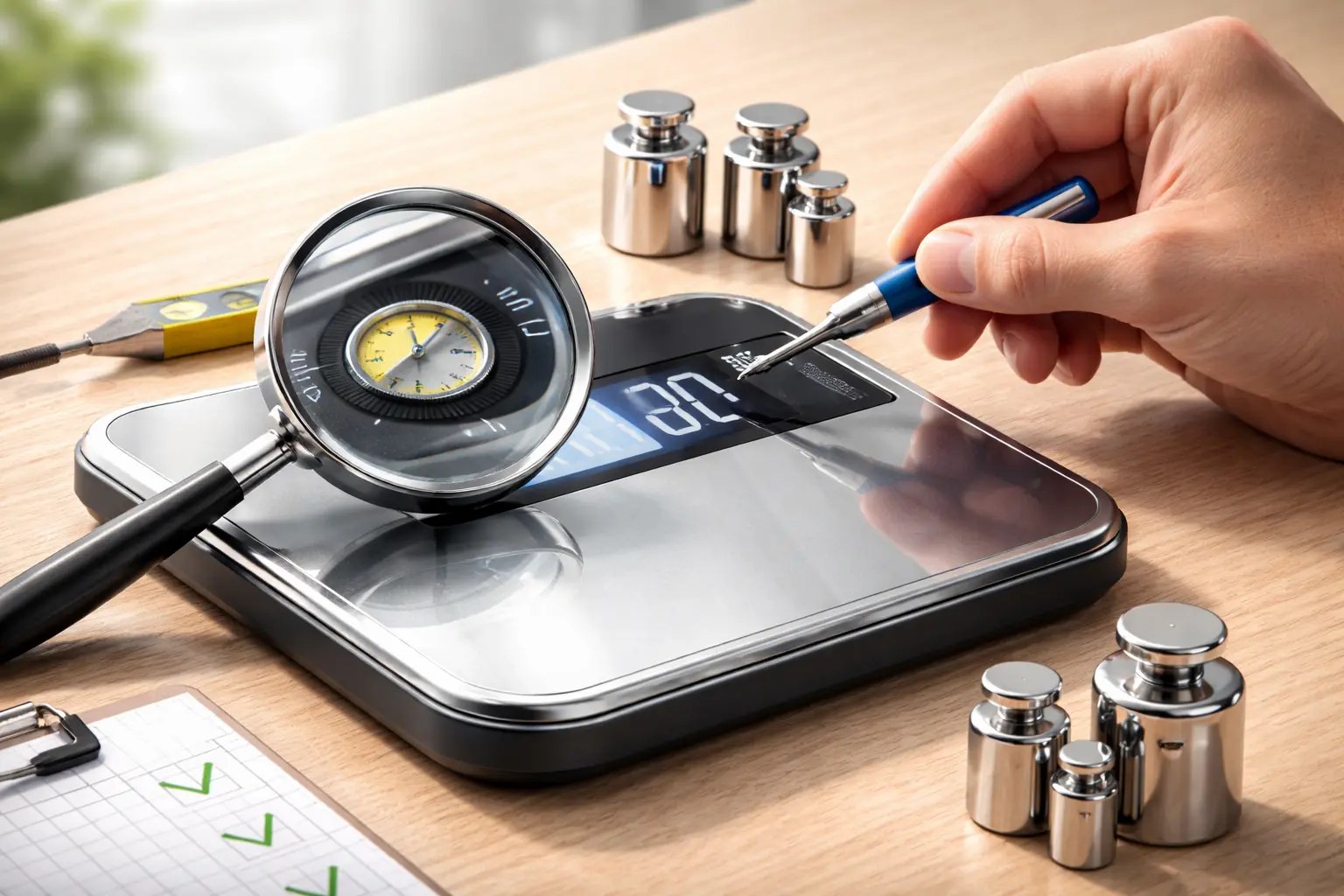
A Weighing Scale gives reliable results only when it shows the correct weight. Many people trust their scale without checking its accuracy. Over time, small errors can affect readings. These errors can lead to incorrect weight tracking. Scale Calibration corrects these errors and restores accuracy. This guide explains how to calibrate a home Weighing Scale using simple steps. The article uses clear language and a direct structure for easy understanding.
Why Scale Calibration Is Important
A Weighing Scale measures weight through internal sensors. These sensors respond to pressure. Over time, regular use, movement, and surface changes can affect sensor accuracy. When this happens, the scale may show higher or lower readings than the actual weight.
Scale Calibration resets the internal system. This process aligns the measurement with a known reference weight. Accurate calibration ensures correct readings every time you step on the scale. If you track body weight for health reasons, accurate readings help you make informed decisions. If you use a scale for food or parcel measurement, precise weight prevents errors.
Temperature changes also affect electronic scales. Sudden changes in room temperature can alter internal components. Regular Scale Calibration reduces these issues. A well-calibrated Weighing Scale increases reliability and trust in results.
Signs That Your Weighing Scale Needs Calibration
A Weighing Scale often shows warning signs before it becomes inaccurate. If the scale gives different readings when you weigh yourself twice in a row, calibration may be required to restore measurement accuracy. Likewise, if the reading changes after you slightly move the scale, the surface beneath it could be affecting the internal sensors, leading to inconsistent results.
Another clear sign appears when the scale does not return to zero. When you switch it on, the display should show zero before use. If another number appears on the screen, the scale likely needs resetting or proper adjustment. In such situations, timely scale calibration by Scales 4 U can help restore precision and ensure the readings remain consistent for daily or commercial use.
If you accidentally drop the Weighing Scale, its internal load cells may shift out of alignment. Even a minor impact can disturb accuracy. Similarly, after replacing batteries, some digital models require recalibration to function correctly. Performing regular monthly checks and recalibration when needed helps maintain long-term reliability and consistent performance.
Types of Home Weighing Scales
Home scales come in different types. Each type uses a different measurement system. The calibration method depends on the model.
Digital Weighing Scale
A digital Weighing Scale uses electronic sensors. These sensors measure pressure and convert it into digital readings. Digital models often include an automatic calibration function. Some models require a manual process using a specific button sequence.
Digital scales are common in modern homes. They provide quick and clear readings. These scales usually require batteries. When batteries weaken, accuracy may decrease. After battery replacement, perform Scale Calibration to maintain accuracy.
Mechanical Weighing Scale
A mechanical Weighing Scale uses a spring mechanism. The spring stretches when weight applies pressure. The dial then shows the reading. Mechanical models do not require batteries. However, springs can loosen over time.
Mechanical scales require manual adjustment. Most models have a small calibration wheel or screw. You turn this adjustment until the dial shows zero before use. Regular checking helps prevent long-term error.
Tools Required for Proper Scale Calibration
Scale Calibration requires a stable surface and a known weight. A hard, flat surface ensures accurate measurement. Avoid carpets or uneven floors. These surfaces cause incorrect readings.
A calibration weight gives the best results. If you do not have a professional weight, you can use packaged items with printed weight. For example, sealed bags of sugar or flour often show exact weight. Ensure the packaging remains sealed to prevent variation.
Keep the room at normal temperature. Sudden heat or cold may affect digital sensors. Allow the Weighing Scale to rest at room temperature for at least one hour before calibration.
Preparing the Weighing Scale Before Calibration
Place the Weighing Scale on a flat, solid surface. Bathroom tiles or wooden floors work well. Press lightly on each corner to check stability. The scale should not wobble.
Turn on the scale and allow it to reset to zero. Remove any objects from the surface. If the display does not show zero, turn off the scale and restart it.
For digital models, check the battery level. Replace weak batteries before Scale Calibration. Low power affects sensor accuracy.
For mechanical models, inspect the dial. If the needle does not point to zero, adjust the calibration wheel until it aligns correctly.
Step-by-Step Guide for Digital Scale Calibration
Digital models often include built-in Scale Calibration functions. Follow these general steps. Always check your user manual for model-specific instructions.
First, turn on the Weighing Scale. Wait until the display shows zero. Press the calibration button. Some models require pressing and holding a specific button. The display may show “CAL” or a similar message.
Next, place the calibration weight in the centre of the scale. Ensure the weight sits evenly. The scale will measure the reference weight. After a few seconds, the display will confirm calibration.
Remove the weight and allow the scale to reset. Check accuracy by weighing the reference weight again. The reading should match the known value.
If the scale shows incorrect results, repeat the process. Ensure the surface remains flat and stable during calibration.
Step-by-Step Guide for Mechanical Scale Calibration
Mechanical models use a simpler method. Place the Weighing Scale on a hard surface. Check the dial without standing on it. The needle should point to zero.
If the needle does not align with zero, locate the calibration wheel. This wheel usually sits near the base of the scale. Turn the wheel slowly until the needle points exactly at zero.
Step on the scale and check your weight. Step off and observe whether the needle returns to zero. Repeat adjustment if necessary.
Mechanical Scale Calibration does not require electronic settings. However, regular checking prevents long-term spring tension errors.
Testing the Accuracy After Scale Calibration
After completing Scale Calibration, test the accuracy. Place the known weight on the Weighing Scale. The reading should match the labelled value.
Repeat the test three times. Consistent results confirm accuracy. If readings vary, check the surface stability.
You can also weigh yourself twice. Step off completely between readings. If both results match, the scale works correctly.
Accurate testing builds confidence in your Weighing Scale. Regular testing prevents unnoticed errors.
Common Mistakes During Scale Calibration
Many users make simple mistakes during calibration. Placing the scale on carpet causes uneven pressure. This mistake leads to false readings.
Using an incorrect reference weight also causes error. Ensure the weight has an exact printed value. Avoid guessing the weight of random items.
Ignoring battery condition affects digital scales. Weak batteries reduce sensor performance. Replace batteries before starting Scale Calibration.
Rushing the process may also cause error. Allow the scale to stabilise before placing the reference weight.
How Often Should You Calibrate a Home Weighing Scale?
Regular Scale Calibration maintains accuracy. For home use, check calibration once every month. If you move the Weighing Scale to a new location, recalibrate immediately.
Calibrate after replacing batteries. Calibrate after dropping the scale. Frequent use may also require more regular checks.
Consistent calibration prevents long-term measurement drift. Simple monthly checks keep results reliable.
Maintaining Long-Term Accuracy of Your Weighing Scale
Proper maintenance improves scale lifespan. Store the Weighing Scale on a flat surface. Avoid storing it in humid areas. Moisture may affect internal components.
Clean the surface with a dry cloth. Avoid water entering electronic parts. For mechanical models, avoid heavy impact that may damage the spring.
Always step gently onto the scale. Sudden force affects sensors and springs. Consistent use and regular Scale Calibration maintain performance.
Conclusion
A Weighing Scale provides accurate results only when it receives proper care. Scale Calibration ensures correct measurement by aligning the scale with a known reference weight. Digital and mechanical models use different methods, but both require regular checking.
Place the scale on a flat surface. Use an accurate reference weight. Replace weak batteries before calibration. Test results after completing the process.
Monthly Scale Calibration improves reliability and confidence in readings. Accurate measurement supports better health tracking and daily use.
 Grow Your Wealth